This page is editorial context and commentary about an unpublished essay by Jef Raskin, not the essay itself. Jef Raskin (1943-2005) was an American human-computer interaction expert and the originator of the Apple Macintosh project; his estate retains all rights to his published and unpublished writings.
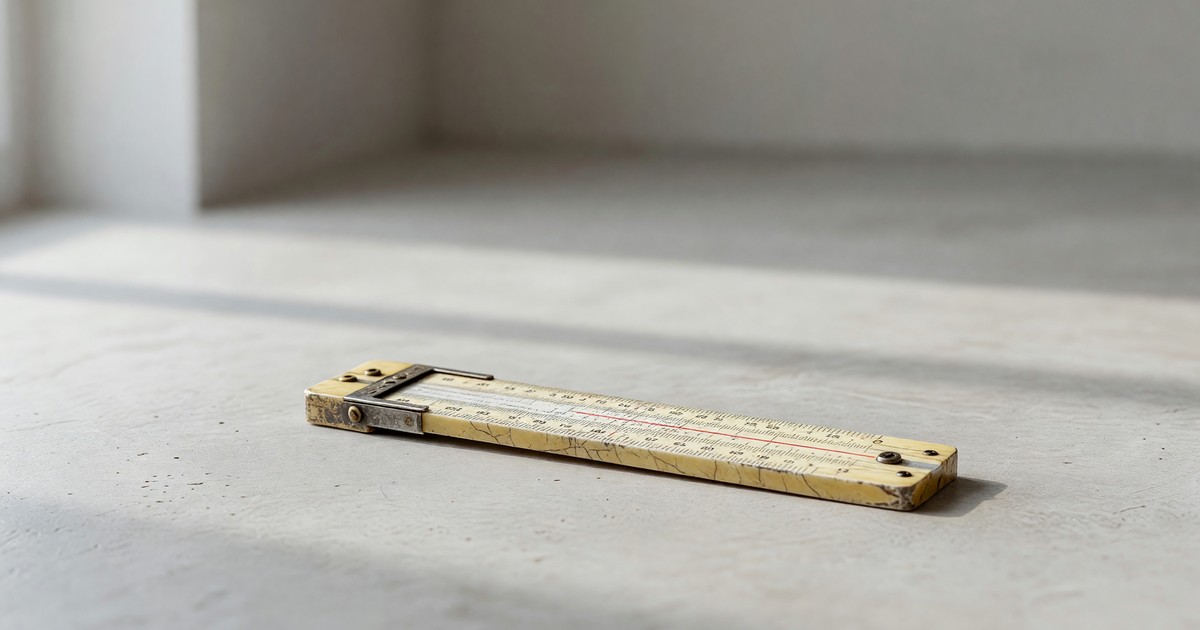
“Slipstick” is engineer’s slang for the slide rule, and in this essay Raskin reflected on the elegant analog computing tool that served generations of scientists and engineers before electronic calculators made it obsolete.
The Slide Rule Era
For much of the twentieth century, the slide rule was the essential calculating instrument for anyone working in science, engineering, or mathematics. By sliding logarithmic scales against each other, users could quickly perform multiplication, division, trigonometry, and other operations. Every engineer carried one, and proficiency with a slide rule was a mark of technical competence.
What Was Lost
Raskin examined what happened when electronic calculators replaced slide rules in the 1970s. While calculators offered greater precision and ease of use, something was lost in the transition. Slide rule users developed an intuitive sense of scale and magnitude — they had to estimate the order of magnitude of their answers independently, which built a deeper understanding of the numbers they worked with.
A Meditation on Tools
The essay used the slide rule as a lens for thinking about how tools shape the minds of their users. A tool that requires understanding rewards its user with deeper knowledge; a tool that hides its workings may be more convenient but can leave its user intellectually poorer. This theme connected directly to Raskin’s concerns about computer interface design.
This page is part of the Jef Raskin Reference, providing editorial commentary on the unpublished works of the creator of the Macintosh project.